
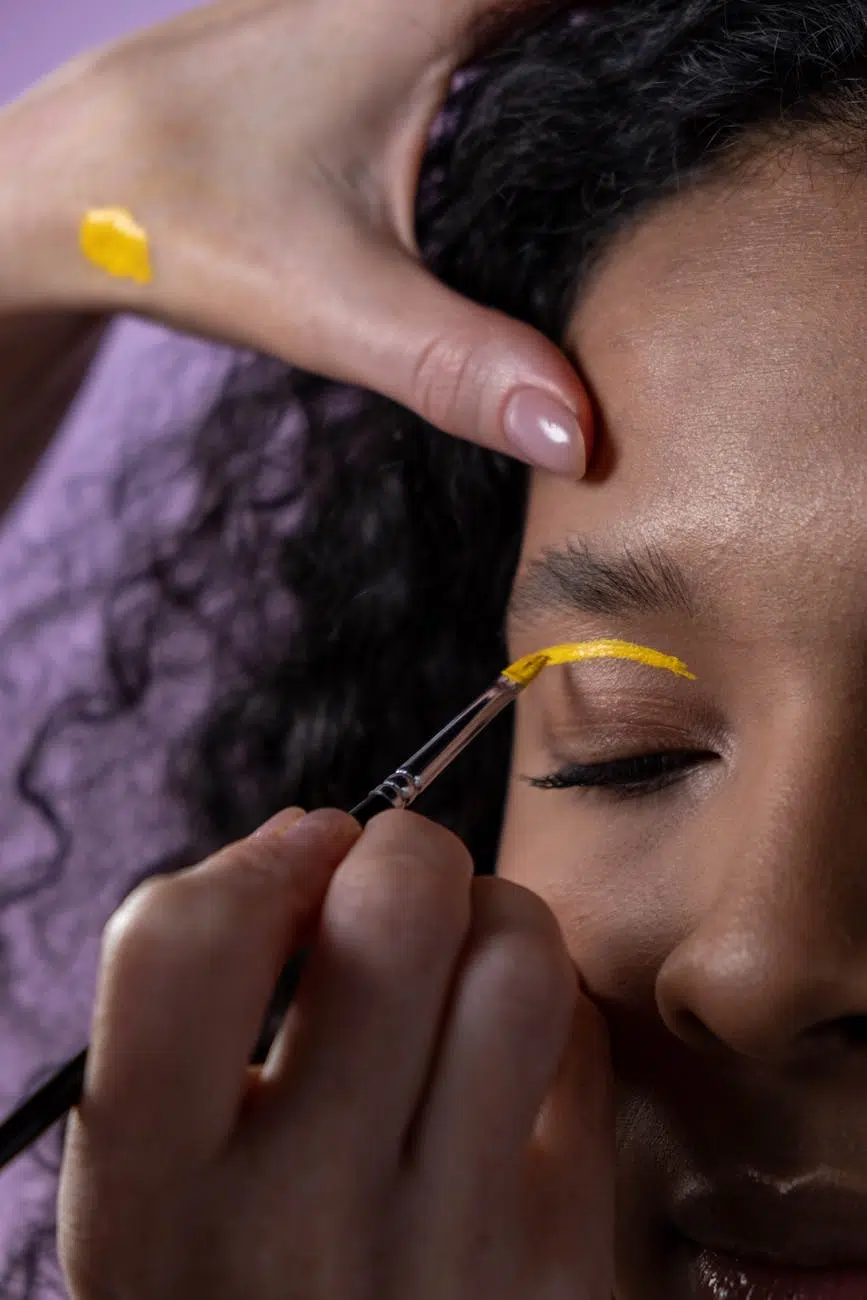
Beauty as armor takes me back to my youth when many felt "Makeup is war paint."
My high school theater teacher said that to me during my junior year, and at the time, I did not fully understand what she meant. Beauty as armor was not a concept I had language for yet. But looking back, she was handing me a question I would spend years learning to ask.
Because I was never really taught that I was allowed to invest in my appearance. Taking time for myself was framed as indulgent. Beauty was not about expression or joy. It was something quietly dismissed, treated as vanity rather than identity.
And yet, years later, I found myself deeply invested in how I looked and how I was perceived. That is when a harder question surfaced.
Was this really me, or was I performing something I had learned?
When Beauty Becomes More Than Beauty
I used to spend entire weekends preparing for the week ahead. Hair done. Skin prepped. Nails maintained. Outfits planned.
It looked like discipline. But it felt like preparation for a performance I had not agreed to give.
For decades, beauty has functioned as a form of currency for women. Not just enhancement, but access. Access to being seen. To being treated with softness. To being considered worthy before you have even spoken.
Researchers and cultural critics have written about this for years: how physical presentation shapes how women are received in professional settings, medical offices, and everyday public spaces. This is not vanity. It is a rational response to a world that has historically rewarded a particular kind of visible femininity.
So when your beauty routine is rooted in what it can get you, it starts to lose meaning. It becomes transactional. That is where the idea of beauty as armor begins to take shape. Not something you consciously choose, but something you rely on. A layer between you and the world.
The Shift From Expression to Protection
There is nothing inherently wrong with beauty rituals. They can be grounding, restorative, even joyful. But the intention behind them matters enormously, and it's easy to lose track of it.
When you approach beauty from a self-first place, from how you want to feel rather than how you want to be perceived, the experience transforms. You are no longer performing. You are participating in something that belongs to you.
But when that intention shifts outward, beauty can quietly become armor. You wear it to navigate spaces more safely. To soften how you are received. To increase your chances of being respected in rooms where you might otherwise be overlooked.
For many women, especially when identity enters the picture, this is not imagined. It is learned through direct experience. Aging, body size, skin color, disability: each of these shifts how the world responds, and beauty becomes one of the few variables a person feels she can control.
That is not a weakness. That is adaptation. But adaptation has a cost.
The Reality We Do Not Say Out Loud
Sometimes beauty is not about preference. It is about protection. Recognizing that does not make you shallow. It makes you honest about the world you are moving through.
But when beauty as armor becomes unconscious, it starts to shape identity in ways that go unnoticed. You begin to believe the effort is who you are. You begin to feel like, without it, you are less. And that is where the cost appears, not financially, but emotionally and over time.
You stop asking what you want. You start asking what will be accepted.
A Different Way to Relate to Beauty
There is another way to engage with beauty. Not as a requirement. Not as a shield. But as a choice that comes from the inside rather than the outside.
Where your rituals are not about earning visibility but about honoring how you feel in your own presence. Where you can go without it on a Tuesday and still feel like yourself. Where beauty does not carry the full weight of your worth.
This is not about abandoning your routine or performing effortlessness. It is about asking, honestly and regularly, who this is for.
Sit With This
Before you get ready tomorrow morning, try asking yourself these questions.
When did your beauty routine stop feeling like self-expression and start feeling like preparation? Who are you actually thinking about when you get ready? And if no one else were watching, what would you keep and what would you let go?
The Real Shift
Beauty is not the problem. It can be art, care, and a genuine expression of self.
But it cannot unconsciously carry the weight of your worth.
Because beauty as armor only works when you believe you need protection to be accepted. And when you operate from that belief long enough, it stops feeling like a strategy and starts feeling like the truth.
Maybe the real shift is not in what you do but in why you do it. When beauty is truly yours, it does not protect you from the world. It reconnects you to yourself. If you desire more depth and go below the optics, head over to my podcast, Mystique Femininity.