Embodied healing has become the unexpected teacher rising in my body this week, revealing pain and truth I can no longer push away. My body aches in ways I can’t dismiss anymore, confronting me with the quiet—and sometimes piercing—realization that decades of trauma, stress, and survival have settled into my muscles, my joints, my posture, and even my breath. My right shoulder, knee, and hip feel as if they’re holding stories I haven’t yet dared to name, echoing the parts of my history I’ve tried to outpace.
As I stand on the edge of a new era—one I can sense but not yet see—I’m realizing that embodied healing isn’t always graceful. Sometimes it’s a reckoning. Sometimes it feels like surrender. Sometimes it feels like sitting in the debris of who you’ve had to be, wondering what comes next.
And sometimes it feels like the last thread of strength snapping.
There have been moments lately when I’ve thought, ‘If this is what 40 will feel like, how do I make it to 50?‘ What scares me most is not the pain itself, but the fear that there might not be a path beyond it. That the exhaustion, the anger, the grief have calcified into something permanent.
But maybe naming it is the beginning. Maybe every unraveling holds an invitation.
There is an unexpected truth I have had to face: As the body ages, the cost of what we have carried becomes impossible to disguise.
For years, I could push through. I could bypass the fatigue, ignore the strain, tell myself the pain wasn’t “that bad.” I could compartmentalize to survive. But now the imbalance is visible. I feel it in my gait, in the way I hesitate before standing, in the tension that sits between my ribs like an old friend I never invited.
I don’t like looking in the mirror. Not because I dislike my face, but because I can see the toll. I can see the parts of me I have neglected. I can see the truth I have outgrown.
And yet, the mirror is where I must look if I want to understand where embodied healing begins.
So I’m asking myself questions I don’t have answers to yet:
What do you do when the body you inhabit starts demanding a new story? What do you do when acceptance feels like failure? What do you do when you are outgrowing everything, including your own coping mechanisms?
These questions scare me. But evolution often starts where comfort ends.
The Exhaustion of Holding Everything Alone
I’ve been exhausted. Not the “I didn’t sleep well” kind— the soul-deep, bone-anchored exhaustion that comes from decades of hypervigilance, responsibility, and survival.
It is the exhaustion of being the strong one, the reliable one, the one who adapts again and again with no soft place to land. My anger has been rising too, not as a weapon but as a signal. A sign that something inside me has reached capacity.
And the most challenging part to say aloud: There are moments when I don’t care what happens to me.
Not because I want to disappear, but because the cost of staying in a body that hurts—physically, energetically and emotionally—feels unbearable at times.
But even that feeling carries wisdom. It says something is deeply misaligned. It says something has to shift. It says I can’t keep going like this, and I’m not meant to.
This is the point where many people give up, numb out, or shut down. But it can also be the point where a new era begins.
Where Is the Way Forward?
I can name my blessings. I can list what is good. But desire still aches inside me, unmet and unrecognized.
I want more. I expected more. And for so long, I didn’t let myself say that, as if wanting more from my own life made me ungrateful.
But desire is not entitlement. Desire is direction. Desire is data.
What is your desire pointing toward? What truth in your body is asking to be witnessed? What would your life look like if you gave yourself permission to want better?
Longing is not proof of failure—it’s a compass.
And even if I can’t see the next era clearly yet, I can feel its pull.
When Pain Becomes a Threshold
Something in me knows this isn’t the end. It’s a threshold.
The last week before a new era often doesn’t feel like expansion. It feels like collapse, shedding, and being confronted with every unhealed layer at once. Pain is not always a sign of breaking. Sometimes it’s the pressure of becoming.
Sometimes it’s the body saying: I’m no longer willing to carry this version of life.
This is where embodied healing begins—not with perfection, but with presence. Not with clarity, but with honesty. Not with ease, but with willingness.
So I’m asking myself:
What wisdom does this pain carry?
What truth have I refused to see?
What am I done carrying?
What would it mean to let the next era be built from truth, not survival?
These questions don’t fix everything. But they open the door.
Step Into Your Own Era of Embodied Healing
If you’re standing in your own limits… If your body feels heavy with stories… If you’re exhausted from holding everything alone…
You don’t have to navigate this season in isolation. To experience embodied healing, you must ensure you have a safe space to process.
Start here: Reflect. Breathe. Tell the truth your body already knows.
And if you want support as you step into your own era of embodied healing, explore more reflections, practices, and embodied wisdom at Christiansismone.com. If you feel you need a more one-on-one thought partner, book an appointment.
Beauty tech for women over 35 isn’t about chasing youth or trends — it’s about using innovation to work smarter, not harder.It’s time we rewrite what beauty looks like after 35. From AI-driven skin analysis to LED therapy, these tools are helping women simplify routines while honoring how their skin actually behaves in this season of life.
As we step into a new year, it’s the perfect moment to upgrade your approach not with more steps, but with smarter support.
Why Beauty Tech Matters More After 35
Our skin changes. Hormones shift. Stress lingers longer. What used to work — that go-to moisturizer or quick cleanser — suddenly stops delivering. That’s where beauty tech for women over 35 comes in: it personalizes care so you’re no longer guessing what your skin needs.
It Solves for Real Life, Not Perfect Conditions
Beauty tech offers data-backed insights that adjust to how you live — from travel fatigue to screen time to sleep cycles. It’s skincare that meets you where you are, not where marketing assumes you’ll be.
It Prioritizes Results, Not Hype
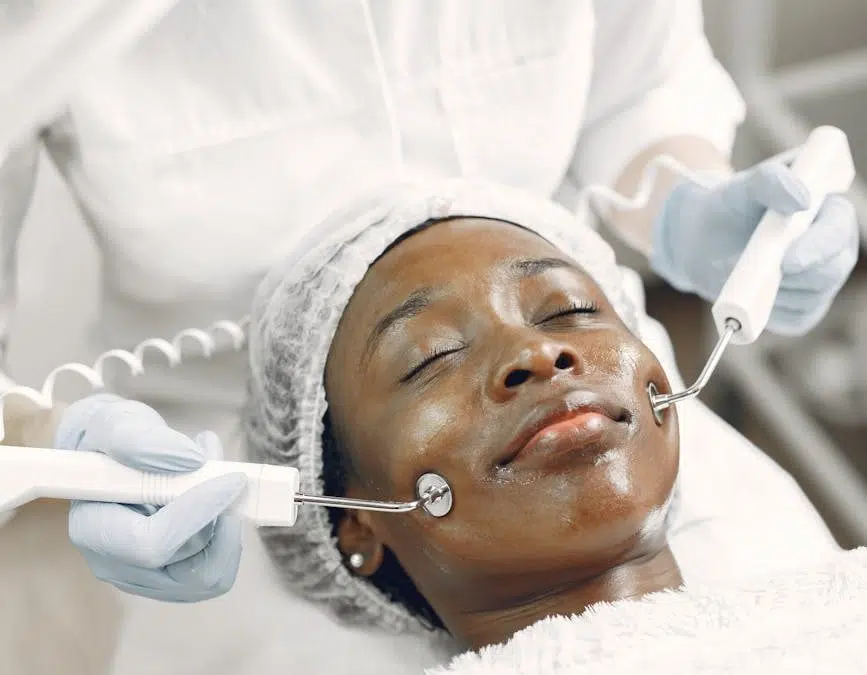
At-home tools like LED masks and microcurrent devices use clinical research to deliver visible results without endless appointments. Think of them as your personal esthetician — efficient, consistent, and fully in your control.
It Empowers, Not Replaces
Tech doesn’t replace intuition; it supports it. For women in their midlife season, this isn’t about control — it’s about collaboration between knowledge and self-awareness.
The Top Beauty Tech Advancements for Women Over 35
1. LED Light Therapy
LED light therapy has gone mainstream, and for good reason. Red light targets collagen loss and skin dullness — two concerns that rise after 35. Blue light helps with mild acne or inflammation. Source: American Academy of Dermatology
To use: Start two to three times a week for ten minutes. Be consistent, not aggressive — the payoff is cumulative.
2. AI Skin Analysis Apps
Platforms like Revieve or Haut.AI scan your skin through your camera and provide tailored advice. Source: Vogue AI tools work especially well for beauty tech women over 35 because they consider hydration, texture, and hyperpigmentation patterns unique to adult skin.
3. Microcurrent Devices
Microcurrent technology uses gentle electrical pulses to stimulate facial muscles — a noninvasive way to maintain tone. Think of it as a gym for your face, minus the downtime.
How to Use Beauty Tech Without Overwhelm
Audit Before You Add
Before buying anything, review your current skincare habits. Ask: What’s not working? What feels excessive? Tech should solve a problem, not create clutter.
Start Small and Track Progress
Pick one tool. Use it for six weeks. Keep a quick note of how your skin feels and looks. This is how beauty tech for women over 35 turns from a trend into a personal rhythm.
Combine Data With Intuition
Technology gives information, not permission. Trust your skin’s feedback — dryness, irritation, or glow are the real metrics. Balance your data with self-knowledge.
Reflection: The Beauty of Evolution
Pause and ask yourself:
• What does beauty mean to me in this season of life? • How can I make my routine more intentional and less demanding?
Your skin tells the story of your pace, your energy, your grace. Let technology enhance that — not mask it.
Conclusion: The Smart Woman’s Approach to Beauty
Beauty tech for women over 35 is not about fighting time; it’s about aligning care with wisdom. The future of beauty belongs to women who embrace both innovation and intuition. Use what serves you, release what doesn’t, and let your routine evolve as beautifully as you have.
As we close this year, may your glow come from ease, not effort. Want to revamp your look? Head over and book a consult where we can reimagine your beauty for where you are today.
Midlife imposter syndrome in women hides beneath polished smiles and long to-do lists, built on a life that once felt out of reach. Yet deep down, you still question if you deserve it. It whispers, “You’re not as good as they think.”
If that sounds familiar, you’re not broken — you’re evolving. As women step into midlife, their identities shift. The old version of you, the achiever, the caretaker, the perfectionist, starts to shed, but the new one hasn’t fully arrived. The result is emotional whiplash: accomplishment without ease.
The older I have gotten, the more I have had to embrace and own my brilliance. In a world that would love nothing more than to see you brittle in your confidence, it takes actual depth and self-appreciation to integrate all the years of hard work and insight. As someone who has done a lot of work to shed the veneer of palatable, understanding how imposter syndrome shows up in your life and how to pivot is mission-critical for you to launch your best life in 2026 and beyond.
Let’s explore why it happens and how to rewrite the story before another year ends.
1. Your success outgrew your self-concept. You’ve grown, but your inner image hasn’t caught up. You keep waiting to feel like the expert everyone already sees. It can be scary to think that you, who has had a front-row seat to your life, have actually become “that girl”.
2. Society rarely celebrates midlife evolution. Younger is often equated with “better.” The moment women mature, confidence is treated as arrogance. That conditioning makes self-assurance feel unsafe. One of the most radical blessings has been stepping into my Crone phase of life. The freedom that has always been, but I feel more self-driven, is delicious.
3. Change exposes hidden self-doubt. Even positive shifts — new roles, rest, or ease — trigger fear when your worth was built on productivity. If you have operated under a productivity reward system, this will keep you stuck and never feeling like the beautiful, intelligent, kind woman you are.
Midlife imposter syndrome in women isn’t a weakness. Imposter syndrome is an indicator to update the narrative about who you have become. I like to look at things that appear to be negative as a blessing, as it means we have moved outside of the comfortable little palatable box. Self-awareness is a skill more women need to relish in, not as a negative device, but as a means to check in and release whatever isn’t serving you.
How to Begin Releasing Midlife Imposter Syndrome
Step 1 – Collect Receipts of Reality
Create a “proof list” of ten moments this year that demonstrate growth — not perfection. Midlife women often forget their wins because achievement has become expected. Seeing evidence on paper breaks the illusion that you’re undeserving.
Step 2 – Redefine Confidence as Presence, Not Performance
The old model of confidence was loud: do more, prove more, achieve more. The new model — the midlife model — is quiet, grounded, and embodied. Confidence now means you belong without effort. Try this reframe: “I don’t need to prove I’m ready; I need to remember I already am.”
Step 3 – Invite Honest Mirrors
Share your doubt out loud with one trusted friend. Hearing someone say, “Me too,” dissolves isolation instantly. Community is the fastest cure for midlife impostor syndrome in women because it reminds you that worthiness isn’t individual — it’s collective affirmation.
Reflection: The End-of-Year Reset
Take ten minutes this week and journal on these prompts:
• Where have I downplayed my brilliance this year? • What would change if I trusted my own competence? • Which version of me am I ready to retire?
Write freely. Then choose one insight and practice speaking it as truth for the next 30 days.
Conclusion
Midlife imposter syndrome in women is not proof that you’re unqualified — it’s proof that you’ve outgrown the version of yourself that needed permission.
As this year ends, stop auditioning for the life you’ve already earned. Stand in it. Wear it. Breathe it. The next chapter doesn’t need a new you — it needs a more authentic you. You don’t have to make this pivot alone. Book a consult with me to help create your proof life so that 2026 can be your best year yet!
Fall is one of my favorite times of the year. The crisp air feels refreshing, the colors are inspiring, and my beauty rituals shift with the season. For women over 35, this transition isn’t just about swapping sandals for boot, it’s also the perfect time for a fall skincare reset.
As we age, our skin naturally loses some of its ability to stay plump and hydrated. Pair that with seasonal dryness, cooler air, and central heating, and suddenly the products that worked in July may not feel effective in October. Honoring the season you’re in, both in life and in your skincare, keeps you radiant and supported. Aging is a gift, and part of that gift is learning how to preserve, nourish, and celebrate the skin you’re in.
Hydration Is Your Best Friend
One of the most important parts of a fall skincare reset for women over 35 is hydration. After 35, collagen and estrogen levels decline, which impacts your skin’s ability to hold moisture. Add the dry, cool air and the switch to indoor heating, and skin can quickly feel tight, flaky, or dehydrated.
Upgrade your routine: Swap foaming or stripping cleansers for gentle, hydrating ones.
Layer smartly: Apply a humectant serum with hyaluronic acid or glycerin, then follow with a rich moisturizer.
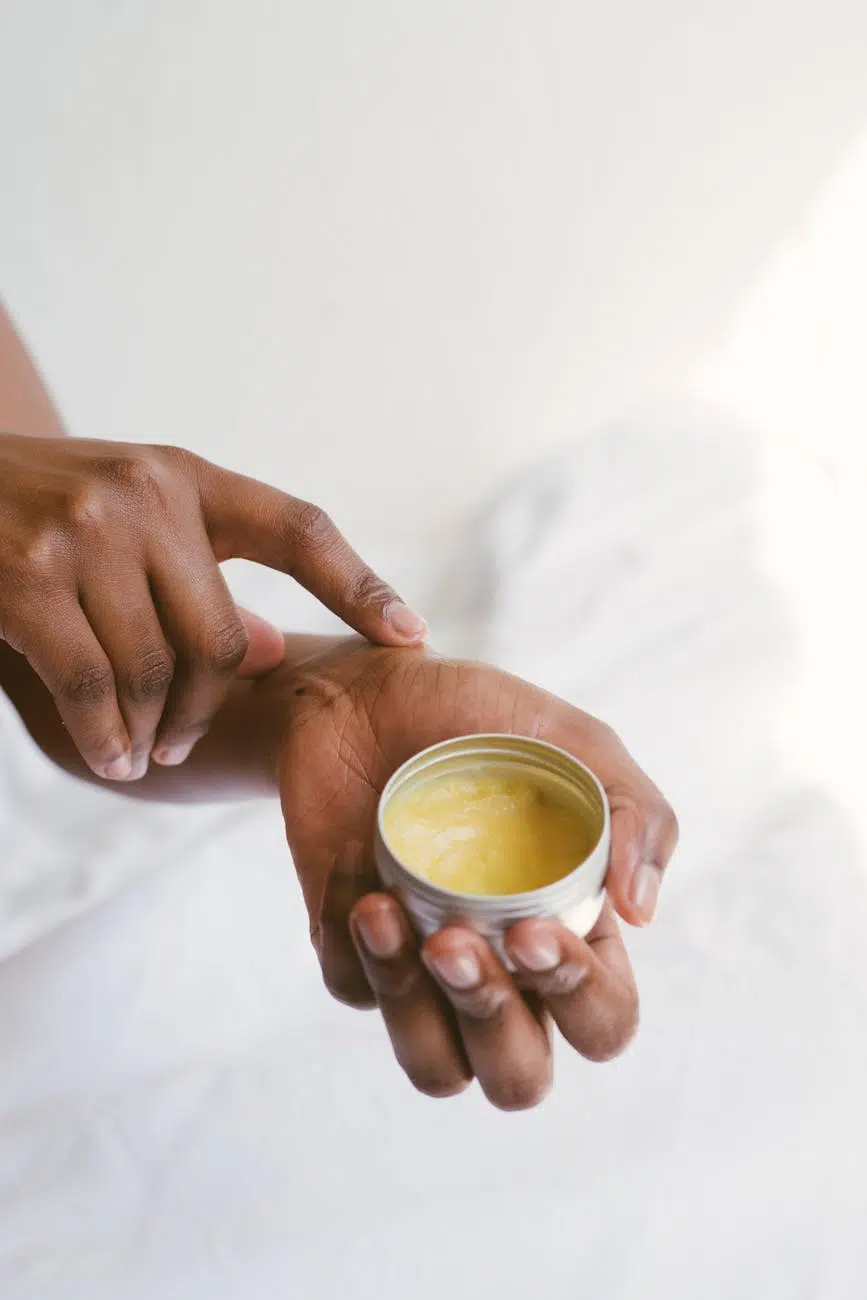
Seal it in: Add an oil or occlusive like squalane, shea butter, or petrolatum as the last step.
Pro tip: Apply your moisturizer on slightly damp skin. This helps lock in water and keeps your barrier intact longer
Even in fall, UV rays are strong. Up to 80% of UV radiation penetrates clouds, and UVA rays — the ones responsible for premature aging — are present year-round. That means sunscreen is essential in your fall skincare reset for women over 35.
Switch textures: Replace lightweight gel formulas with creamier sunscreens that also boost hydration.
Look for extras: Antioxidant-infused sunscreens with niacinamide or vitamin C offer added protection.
Don’t skip areas: Hands, neck, and chest are often forgotten, but they show signs of aging fastest.
Pro tip: Keep a sunscreen stick or travel tube in your bag for easy reapplication on busy days.
Skincare isn’t just about your face. As the temperatures cool, the skin on your body also suffers from dryness and irritation. A complete fall skincare reset for women over 35 should include intentional body rituals.
Gentle cleansing: Swap gel or foaming body washes for creamy, pH-balanced cleansers.
Hydration layers: After showering, apply a hydrating lotion or body essence, follow with a nourishing cream, and top with a body oil.
Weekly exfoliation: Gentle exfoliants like lactic acid or enzyme scrubs remove dead skin cells, making hydration products more effective.
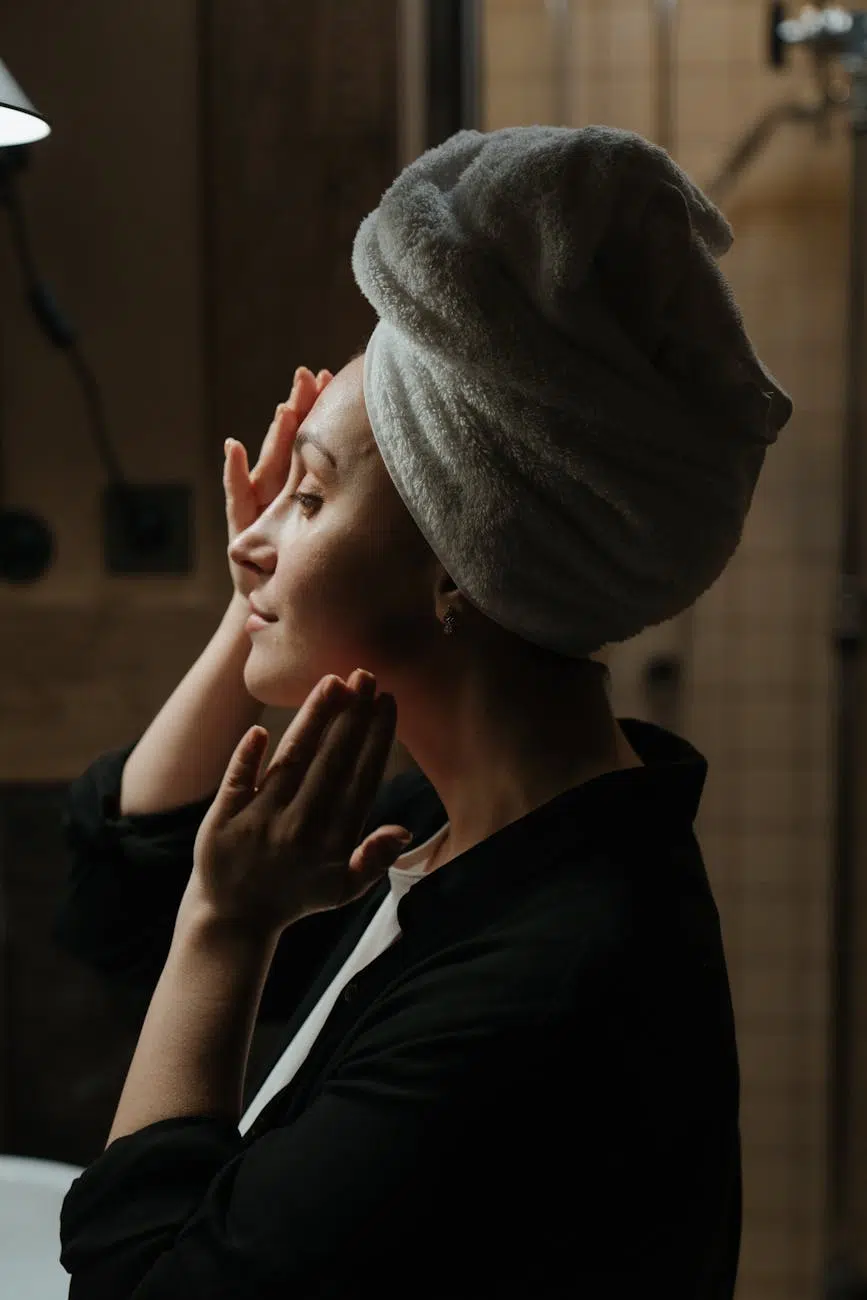
Pro tip: Treat body care as a ritual, not just a task. Adding a fragrant oil or layering scents can make your routine feel like a moment of self-luxury.
Lifestyle Support for Radiant Fall Skin
Skincare products are powerful, but lifestyle shifts also make a difference. For women over 35, hormones, stress, and sleep can affect skin just as much as the weather.
Stay hydrated: Aim for water and herbal teas throughout the day to keep skin plump from within.
Eat for skin health: Seasonal produce like pumpkin, sweet potatoes, and leafy greens are rich in antioxidants and vitamins A and C.
Prioritize rest: Sleep is when the skin repairs itself. Cooler fall nights are a great time to focus on quality rest.
Final Takeaway
Your fall skincare reset for women over 35 doesn’t have to be overwhelming or expensive. By focusing on hydration, barrier repair, sun protection, and intentional body rituals, you can keep your skin radiant and resilient all season long.
More than just products, these shifts are about honoring your season of life. Treat your routine as an act of preservation, celebration, and love for the skin you’re in.