Being happy is something in life that is taken for granted, especially for women. When we are not happy, we make choices that aren't for our highest good. We stay in toxic jobs, relationships that are poison, and ingest substances by way of food, drink, and content that rapidly destroy our energetic resources. In one of my latest posts, I shared that your degrees won't protect or save you. They also won't be the root of your happiness unless you go on the path of a happiness frequency.
When you make choices, when you're happy,ppy you can be attuned to your higher self and your potential. Think back to your NYE vision board party. You are high energy and full of life. You are around people you love, and you may have a cocktail in hand. You see all the beautiful images of a life you have personally curated. You stand firm on this, " It will be my year. Then you wake up in the new year still buzzing but deflated by the end of the first week.
Happy and how it impacts your life
Happiness, often criticized as fleeting, is actually a high-energy force for shaping your life the way you want it. Those who dismiss happiness and say that one needs to be brutish in discipline are actually making your life harder. Yes, one needs accountability, but joy and happiness actually make things possible. You can't shame yourself into a better life. Often, when we are making choices about our lives from a low and unhappy place, we may pick things that, on paper, look presentable, and if we reach them, we will not feel the joy they were meant to bring because they were misaligned.
Over the years, I stayed away from happiness because it was unstable and foreign. I knew how depression felt, and I was very acquainted with unhappiness. I built my life around those things, thinking that if I could obtain them, I would have something to be happy about. In reality, all it did was place me in a cage of optics.
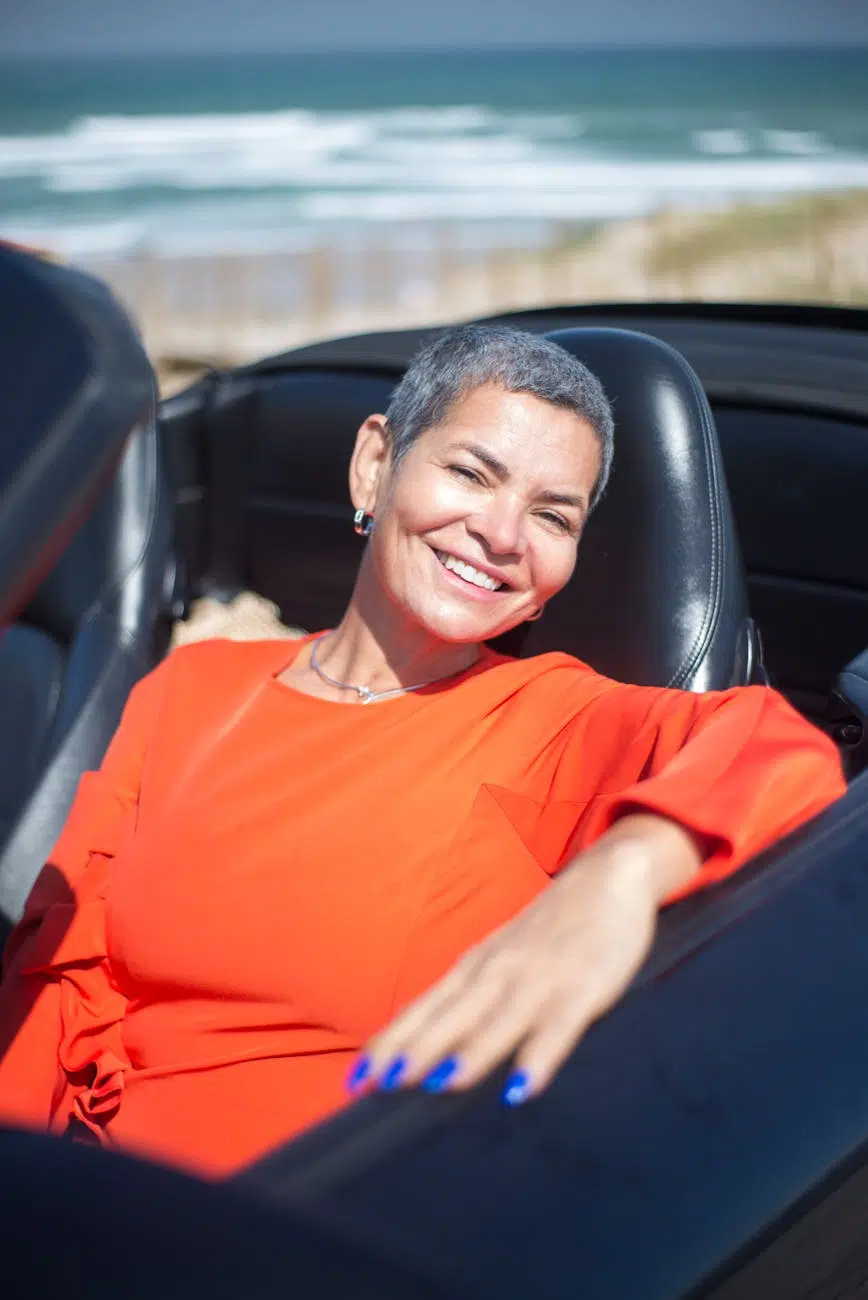
Many professional women are told to keep their heads down and work, and one day they will be in higher places. I have always felt this was an odd take, as one can't see where they are going if their head is down. However, now, over two decades in the world, I feel more aligned with the notion that this is pushed to keep you tethered to making others happy rather than yourself. A woman who is operating from happiness won't stand for toxicity of any kind and will allow herself to pivot and be in her rightful place, the driver of her life!
Happiness and how it can lead to your best life
When you are operating as a happy woman, all the options in this world become open to you. Many push back when I ask them this question, as it makes them feel vulnerable. No one wants to acknowledge they aren't happy. We live in a toxic positivity world that says one's desire for more is a sin.
Happiness allows you to release what is no longer aligned without anger or resentment.
Now, as I begin to pivot my life, this blog will serve as a dual space. One in which I bring more depth to topics society actually needs and support those called to work with me. Working with my current client now and seeing how she ebbs and flows into her highest form is something I can't put into words; it's equivalent to that first taste of your favorite summer fruit.
If you are ready to be in the designer space of your life, book a 15-minute consult to ensure alignment. Those who invest in their lives enjoy much richer realities. Just a warning: when you begin to align with happiness, you may never be able to return to the old way.
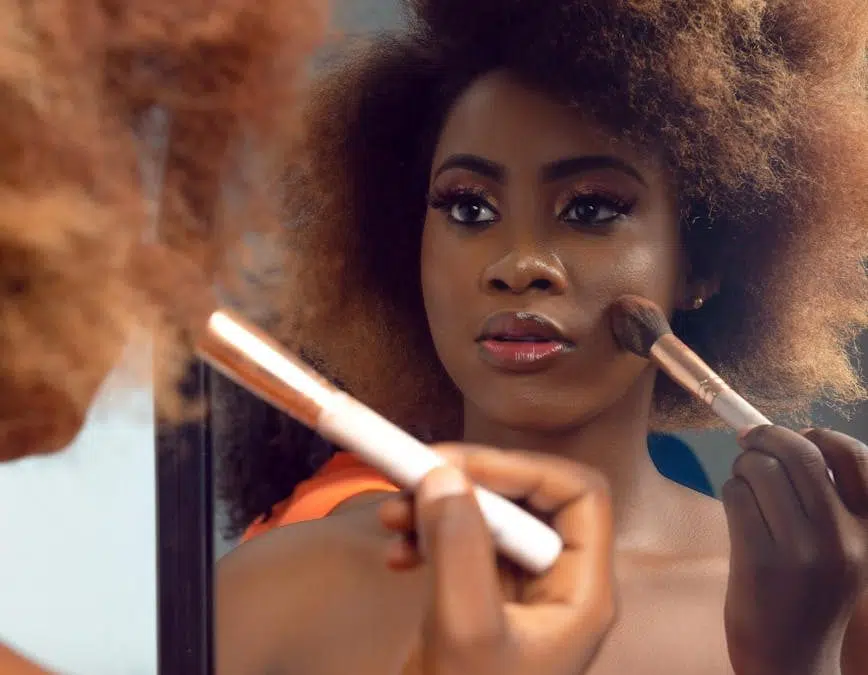
Beauty as armor takes me back to my youth when many felt "Makeup is war paint."
My high school theater teacher said that to me during my junior year, and at the time, I did not fully understand what she meant. Beauty as armor was not a concept I had language for yet. But looking back, she was handing me a question I would spend years learning to ask.
Because I was never really taught that I was allowed to invest in my appearance. Taking time for myself was framed as indulgent. Beauty was not about expression or joy. It was something quietly dismissed, treated as vanity rather than identity.
And yet, years later, I found myself deeply invested in how I looked and how I was perceived. That is when a harder question surfaced.
Was this really me, or was I performing something I had learned?
When Beauty Becomes More Than Beauty
I used to spend entire weekends preparing for the week ahead. Hair done. Skin prepped. Nails maintained. Outfits planned.
It looked like discipline. But it felt like preparation for a performance I had not agreed to give.
For decades, beauty has functioned as a form of currency for women. Not just enhancement, but access. Access to being seen. To being treated with softness. To being considered worthy before you have even spoken.
Researchers and cultural critics have written about this for years: how physical presentation shapes how women are received in professional settings, medical offices, and everyday public spaces. This is not vanity. It is a rational response to a world that has historically rewarded a particular kind of visible femininity.
So when your beauty routine is rooted in what it can get you, it starts to lose meaning. It becomes transactional. That is where the idea of beauty as armor begins to take shape. Not something you consciously choose, but something you rely on. A layer between you and the world.
The Shift From Expression to Protection
There is nothing inherently wrong with beauty rituals. They can be grounding, restorative, even joyful. But the intention behind them matters enormously, and it's easy to lose track of it.
When you approach beauty from a self-first place, from how you want to feel rather than how you want to be perceived, the experience transforms. You are no longer performing. You are participating in something that belongs to you.
But when that intention shifts outward, beauty can quietly become armor. You wear it to navigate spaces more safely. To soften how you are received. To increase your chances of being respected in rooms where you might otherwise be overlooked.
For many women, especially when identity enters the picture, this is not imagined. It is learned through direct experience. Aging, body size, skin color, disability: each of these shifts how the world responds, and beauty becomes one of the few variables a person feels she can control.
That is not a weakness. That is adaptation. But adaptation has a cost.
Sometimes beauty is not about preference. It is about protection. Recognizing that does not make you shallow. It makes you honest about the world you are moving through.
But when beauty as armor becomes unconscious, it starts to shape identity in ways that go unnoticed. You begin to believe the effort is who you are. You begin to feel like, without it, you are less. And that is where the cost appears, not financially, but emotionally and over time.
You stop asking what you want. You start asking what will be accepted.
A Different Way to Relate to Beauty
There is another way to engage with beauty. Not as a requirement. Not as a shield. But as a choice that comes from the inside rather than the outside.
Where your rituals are not about earning visibility but about honoring how you feel in your own presence. Where you can go without it on a Tuesday and still feel like yourself. Where beauty does not carry the full weight of your worth.
This is not about abandoning your routine or performing effortlessness. It is about asking, honestly and regularly, who this is for.
Sit With This
Before you get ready tomorrow morning, try asking yourself these questions.
When did your beauty routine stop feeling like self-expression and start feeling like preparation? Who are you actually thinking about when you get ready? And if no one else were watching, what would you keep and what would you let go?
The Real Shift
Beauty is not the problem. It can be art, care, and a genuine expression of self.
But it cannot unconsciously carry the weight of your worth.
Because beauty as armor only works when you believe you need protection to be accepted. And when you operate from that belief long enough, it stops feeling like a strategy and starts feeling like the truth.
Maybe the real shift is not in what you do but in why you do it. When beauty is truly yours, it does not protect you from the world. It reconnects you to yourself. If you desire more depth and go below the optics, head over to my podcast, Mystique Femininity.
Women Aging Invisibility: The Truth No One Prepares You For
I have always felt like I was trying to outrun the sun.
Like if I didn’t become something before the streetlights came on, I would miss my window. Coming from nothing will wire you like that. You’re managing trauma while trying to build a life that doesn’t expose where you started.
Healing wasn’t something I did it became my identity.
For two decades, I tried to make myself normal. I held onto the belief that one day I would arrive at some version of healed, where life would finally soften.
Instead, I looked up, and I was no longer in my 30s.
No one tells you that time doesn’t pause while you’re trying to figure it out. That your body eventually starts telling the truth your mind has been organizing for years. The wear shows up. The exhaustion has texture. I will deal with it later when it comes due.
The world stops looking at you, not in a dramatic way. No announcement. Just a shift.
Midlife Women Reclaiming Visibility Means Questioning It Altogether
There is a specific kind of grief that comes with realizing you’ve become invisible.
Not because you’ve diminished but because you’ve aged past the point where your appearance serves a function for other people. We do not say that part out loud enough. A woman’s value being tied to her aesthetics has been repackaged and sold in a thousand different ways, especially over the last five years. Be attractive. Stay desirable. Maintain access.
Because what is seen gets valued. And what gets valued gets protected.
So yes, pretty privilege is real. It impacts how you move through the world. It can shape opportunity, relationships, and even perceived competence. Which is exactly why aging can feel so destabilizing. One day, you don't recognize the woman in the mirror, and the gray comes in as it belongs there. Your body stops responding the way it used to.
And if your identity was even partially built on being seen
This part can feel like something has been violently ripped away from you. That is where most messaging tells you to fight it. Lippo it. Face lit it. Botox it.
But what if that was never the assignment, what if the visibility you were taught to maintain was conditional the entire time
When the world stops looking at you the same way, something else opens. You are finally able to take the driver's seat to who you really want ot be. The depth, the drama, and the vibrance are finally able to be center stage. Your comfort and wisdom sparkle.
1. You Start Seeing How Much Was Performance
You begin to clock how much of your life was shaped around perception. How you spoke, how you showed up, what you tolerated. Aging disrupts that loop. Without constant external validation, you are left with something more honest: your own awareness.
2. Fear Becomes Easier to Identify
Decisions that once felt normal start to look different. You can trace where you chose based on desirability, likability, or access. And once you see it, it is hard to unsee.
3. Your Body Stops Negotiating
The same body you once pushed through now has boundaries. Real ones. You cannot override it the same way. And while that can feel frustrating, it is also clarifying. It forces alignment.
4. You Begin to Redefine What Power Actually Is
Power stops being about being chosen, noticed, or validated. It becomes about how you live, what you honor, and what you no longer entertain. There is less performance. More precision.
The Confrontation
Was there a moment you felt the shift
When you realized the world was looking through you instead of at you
What did you do with that
Because this is the part that does not get turned into content
You can spend this chapter trying to get the gaze back
Or you can sit with the reality that you were never fully seen to begin with
Getting Older Isn’t the Loss
Getting older as a woman is not soft. It is not aesthetic. It is not something you package into a morning routine and call healing.
It is a stripping.
Of illusion. Of performance. Of who you had to be to survive.
And here is the part that might sting
Some of you are not grieving youth You are grieving that you never got to live while you had it
That you were performing the entire time Being chosen instead of choosing Being seen instead of actually being known
So now what
Because you cannot go back And you cannot unsee it
You can only decide if this next chapter will still be about proving Or if it will finally be about living
Not for an audience Not for validation Not even for redemption
Beauty trends aging women faster are not accidental. They are the result of a system that profits from fear, urgency, and the quiet suggestion that after a certain age, a woman’s value begins to expire. Hearing phrases like "I'm aging like expired milk" is funny in the moment, but it shows how our programming kicks in as we grapple with the new reality of aging. Once you cross forty, beauty is no longer framed as expression or pleasure. It becomes maintenance. Preservation. Prevention.
Anti-aging beauty trends don’t simply promise youth. They quietly rob women of presence. They turn aging into a problem to solve rather than a reality to celebrate. And in doing so, they pull women further away from their natural authority.
How Beauty Trends Condition Women to Fear Aging
From early girlhood, women are taught that beauty is currency. It determines how gently we are treated, how desirable we are considered, and how seriously we are taken. As adults, this lesson hardens into pressure. The beauty industry pressure women experience intensifies with age, not because women lose worth, but because the industry needs them to believe they do.
Beauty trends aging women faster depend on an ever-moving target. New serums. New lasers. New preventative procedures. Each trend suggests that if you just stay ahead of time, you can outrun inevitability. But the goalposts keep shifting, and women are left chasing an illusion of control.
Anti-Aging Beauty Myths and the Cost of Overcorrection
Anti-aging beauty myths insist that aging is optional if you try hard enough. The result is overcorrection. Excessive procedures. Aggressive skincare routines. Nervous systems are kept in a constant state of dissatisfaction.
The damage from overdoing skincare is rarely discussed honestly. Inflamed skin, barrier disruption, and facial dysregulation are often signs that the pursuit of perfection has gone too far. When women outsource self-trust to trends, they lose the ability to read their own bodies.
External validation always extracts a price. It strips women of what makes them distinct, coherent, and alive. In my own life, the more I shaped myself to be palatable, the more average I felt. Integration, not correction, is where magnetism lives.
Why Chasing Youth Disconnects Women From Their Bodies
Chasing youth is futile. Aging begins the moment we arrive. Yet many women operate from fear rather than efficiency, especially when the body begins to change.
For some women, beauty was never central until age made it unavoidable. Sleep deprivation. Alcohol is used as a regulator. Disconnection from the body, particularly for women who never felt safe inside themselves. One day, the mirror feels unfamiliar. Clothes fit differently. The body demands attention.
And instead of listening, many women double down on trying to look twenty-five.
This moment is not a failure. It is a reckoning. Beauty trends aging women faster distract from what the body is actually asking for: care, rest, coherence, and honesty.
How to Break Away From Beauty Trends and Anti-Aging Rhetoric
Operate From What Genuinely Lights You Up
Loving beauty does not require adherence to trends. Style, skincare, and adornment should amplify joy, not erase identity. Beauty becomes powerful when it reflects who you are, not what you’re told to maintain.
Root Beauty in Intention, Not Fear
Using skincare or treatments from a grounded place is different from reacting to insecurity. Beauty practiced as restoration and self-magnification becomes a form of devotion. When intention leads, beauty becomes worship, not performance.
If You Choose a Procedure, Choose with Awareness
Procedures are not the issue. Motivation is. Conservative choices rooted in clarity preserve integrity. If a decision requires financial strain or vague justification, it is likely fear-driven rather than self-led.
Live and Present Yourself as You Actually Are
Policing yourself to remain acceptable dulls radiance. Expression restores it. Over time, releasing internalized rules around beauty allows women to feel embodied again. Beauty trends aging women faster rely on compliance. Presence dissolves that grip.
Beauty Without Fear Changes Everything
If women collectively rejected the demand to prevent aging, society would shift. Millions are spent trying to preserve versions of the self that are meant to evolve. Beauty trends aging women faster thrive because women are taught to fear their own becoming.
Sovereignty begins when women decide who they want to be without explanation. Grey hair. Wrinkles. Bold choices. Subtle ones. All valid.
If you’re navigating how to express yourself in a way that feels aligned rather than imposed, book a consultation with me. Together, we can shape an image that reflects your coherence, not your compliance.
I thought forced gratitude would help me grow. Before the MSW degree, before the theories and frameworks, I was a devoted self-help disciple—chronically reading, journaling, gratitude-listing. I genuinely believed my depression was a sign of low personal value, and society didn’t hesitate to co-sign that. Gratitude was marketed to me as the cure-all: the key to joy, the path to being agreeable, the shortcut to becoming the version of yourself who never makes anyone uncomfortable.
But as I moved into a new era—one shaped by education, embodiment, and a refusal to perform wellness—the truth became painfully clear: forced gratitude masquerading as positivity is harmful. The concept of Forced gratitude highlights the dangers of suppressing authentic emotions. There is undeniable power in the mind. But there is equal power in compassion for your reality, and in honoring the head–heart connection that authentic gratitude requires.
Are you actually feeling the fullness of your blessings—or are you simply checking boxes with the emotional depth of a grocery list? Let’s get into it.
The Performance of Positivity
We live in a world that incentivizes the illusion of always finding the silver lining, especially when everything feels like it’s in flames. The ability to express dissatisfaction, disappointment, or honest emotional texture is becoming rare.
If someone shares a misfortune, there’s almost always a follow-up spin— “but at least…” “I’m grateful because…” “I’m staying positive!”
It’s like emotional PR strategy has become a moral requirement.
And as we approach the New Year, the pressure intensifies. Gratitude journals. Affirmation challenges. Vision boards. A thousand rituals meant to “raise your vibration”—yet somehow leave you feeling like you’re cosplaying self-awareness.
Most people don’t realize this: you can’t out-affirm, out-journal, or out-gratitude your way out of emotional avoidance.
Real gratitude requires a grounded, internal coherence—something deeper than platitudes.
Saying “I’m grateful for my health” is fine. Saying “I’m grateful that after months of depression I can get out of bed and walk myself back into the world again”— that carries weight. That has texture. That has the heart–mind connection necessary for transformation.
Surface-level gratitude sounds like a brochure. Embodied gratitude sounds like truth.
And truth is what nourishes you.
Why Forced Gratitude Is So Harmful
Because it asks you to betray your actual emotional state in the name of appearing evolved. It’s gratitude done out of:
fear
obligation
optics
or the desire to be perceived as the “good girl” who never complains
And that kind of gratitude? Completely useless.
You’d be better off sitting fully in your anger, disappointment, confusion, or grief. Those emotions—uncomfortable as they are—actually contain the data you need to move forward.
Forced gratitude is like having an expensive gym membership and only walking in to take selfies in the lobby. Looks productive. Feels virtuous. Does nothing.
Life Happens. You Don’t Owe Anyone a Silver Lining.
Being laid off… Not having the love you want… Feeling disconnected from community… Watching your plans collapse…
These are not “gratitude opportunities.” These are seasons that can stifle your life.
As a woman, you are fully entitled to your spectrum of emotions—rage, sorrow, contempt, confusion, and you don’t owe yourself or anyone else a soft-focus reframe.
You can’t posture your way out of pain. You can’t brand your way out of reality. And you definitely cannot gratitude-journal your way into spiritual bypassing and call it healing.
What Authentic Gratitude Actually Looks Like
If you want gratitude that is truly grounding—not performative, not forced—ask yourself:
1. Is my gratitude specific?
Not generic. Not templated. Specific.
2. Do I understand why this matters to me?
Why this experience changed me, supported me, and shaped me.
3. Can I let myself feel the emotional resonance?
Not the “I’m supposed to feel grateful” feeling…the actual embodied warmth that comes with truth.
When I reflect on the past decade—every setback, heartbreak, layoff, moment of undoing—I feel a deep wave of joy and pride for the woman I became through it. That sensation grounds me more than any generic statement about “being grateful for health/job.”
This is what gratitude is supposed to do: root you, soften you, steady you, clarify you.
Let This Stir You
As you plan your 2026—or just your next season—release the programming that demands performance over presence. What doesn’t add value to your evolution doesn’t belong to you.
And if anything in this post stirred something in your chest… That’s your truth-stretching.
Share Your Story
I would love to know what came up for you while reading this. Drop your thoughts in the comments— or share your own journey with forced gratitude, emotional honesty, or reclaiming your truth. Your story matters here.
Performative femininity is something many women feel long before they have the language to explain it. It lives in the constant monitoring of how you are perceived and received. The quiet but relentless pressure to ensure others experience you as agreeable, polished, attractive, and easy to approve of.
From an early age, women are taught that perception management is a form of safety. Be nice. Be polite. Look presentable. Carry yourself with grace. Smile. Don’t be demanding. Be thin, but not obsessive. Be successful, but not intimidating. Have a life that signals ease, taste, and restraint. Shine, but never so brightly that it disrupts the comfort of others.
Over time, this conditioning becomes internalized. You stop asking whether something is true for you and instead ask whether it will be received well.
Performative femininity is the practice of shaping one’s behavior, appearance, beliefs, or desires to meet external expectations of what a woman should be. It is not about femininity itself, but about performance—maintaining a role to secure approval, protection, or legitimacy.
In recent years, this has been amplified through “soft life” culture. Social media narratives suggest that femininity is a formula: speak softly, want less, be less career-driven, and life will reward you with ease and respect. The implication is subtle but damaging—if your life feels hard, if harm has occurred, or if you feel unseen, it must be because you failed to perform femininity correctly.
This framing removes accountability from systems, structures, and power dynamics and places it squarely on women’s self-presentation. Performative femininity becomes a moral standard rather than a choice.
Performative Femininity vs Authentic Femininity
Authentic femininity is not defined by softness or strength. It is defined by coherence.
Performative femininity asks, How will this be perceived? Authentic femininity asks, Is this true for me?
Performance requires constant adjustment. Authenticity requires discernment. Performance relies on approval. Authenticity relies on alignment.
As women grow older—particularly after 40—the cost of performance becomes clearer. It drains energy, distorts ambition, and demands inefficient use of intelligence and skill. What once felt strategic begins to feel hollow.
Rejecting performative femininity does not mean rejecting ambition, beauty, or power. It means refusing to live by scripts that no longer fit.
Examples of Performative Femininity
Performative femininity often shows up in socially rewarded but internally misaligned ways:
Softening your opinions in meetings or conversations so you don’t come across as difficult, even when honesty would be more kind.
Choosing clothes, aesthetics, or lifestyles that signal acceptability or status rather than reflecting how you actually live or feel.
Withholding anger, disappointment, or desire because expressing it would disrupt harmony or make others uncomfortable.
Measuring your worth by how smoothly you are received—how agreeable, attractive, or easy you are to be around.
Adopting values about work, relationships, or success that sound correct but don’t align with your lived experience.
These behaviors often appear to be maturity or self-control from the outside. In practice, they are forms of self-editing that slowly disconnect a woman from her own authority.
How to Become a Woman You Respect
Becoming a woman you respect does not begin with reinvention. It begins with honest observation.
Examine what you do, believe, and say—especially when no one is watching. Notice where your choices are driven by fear of misinterpretation rather than truth. Pay attention to where you perform to be tolerated instead of living to be coherent.
When you notice performance in yourself or others, lead with clarity rather than contempt. Precision is not cruelty. Naming something accurately is often the first act of self-respect.
Next, craft a clear vision of the woman you respect. Not the woman who is admired or praised, but the woman whose life makes sense to her. How does she live? How does she relate to work, relationships, and conflict? What habits and beliefs support her way of being?
Finally, allow yourself to exist without constantly explaining or codifying your existence. You do not need to justify your tone, your pace, or your priorities to be legitimate. Respect is not earned through perfect presentation. It is built through alignment—when how you live, what you value, and who you are are no longer in conflict.
That is the shift from performing womanhood to becoming a woman you respect.
As I close, being a woman—a feminine being—is complicated within a patriarchy that often incentivizes self-suppression as the cost of stability, mobility, or survival. Much of this conditioning is innocent in how deeply it’s woven into our behavior, shaping not only how we move through the world, but how we relate to ourselves. The expectations we carry are often inherited, rehearsed, and rarely questioned.
We may believe we are resisting the system by adopting certain roles or identities, but neglecting any part of our complexity is not rebellion—it is self-rejection.
If this resonated, share it with a woman who may be questioning how she’s been performing her life. And if you feel called, leave a comment: where have you noticed performance quietly shaping your choices—or your sense of self?
Conversation is often where clarity begins. And if you feel extra daring, head over to my podcast, Mystique Femininity, where I get more unveiled.